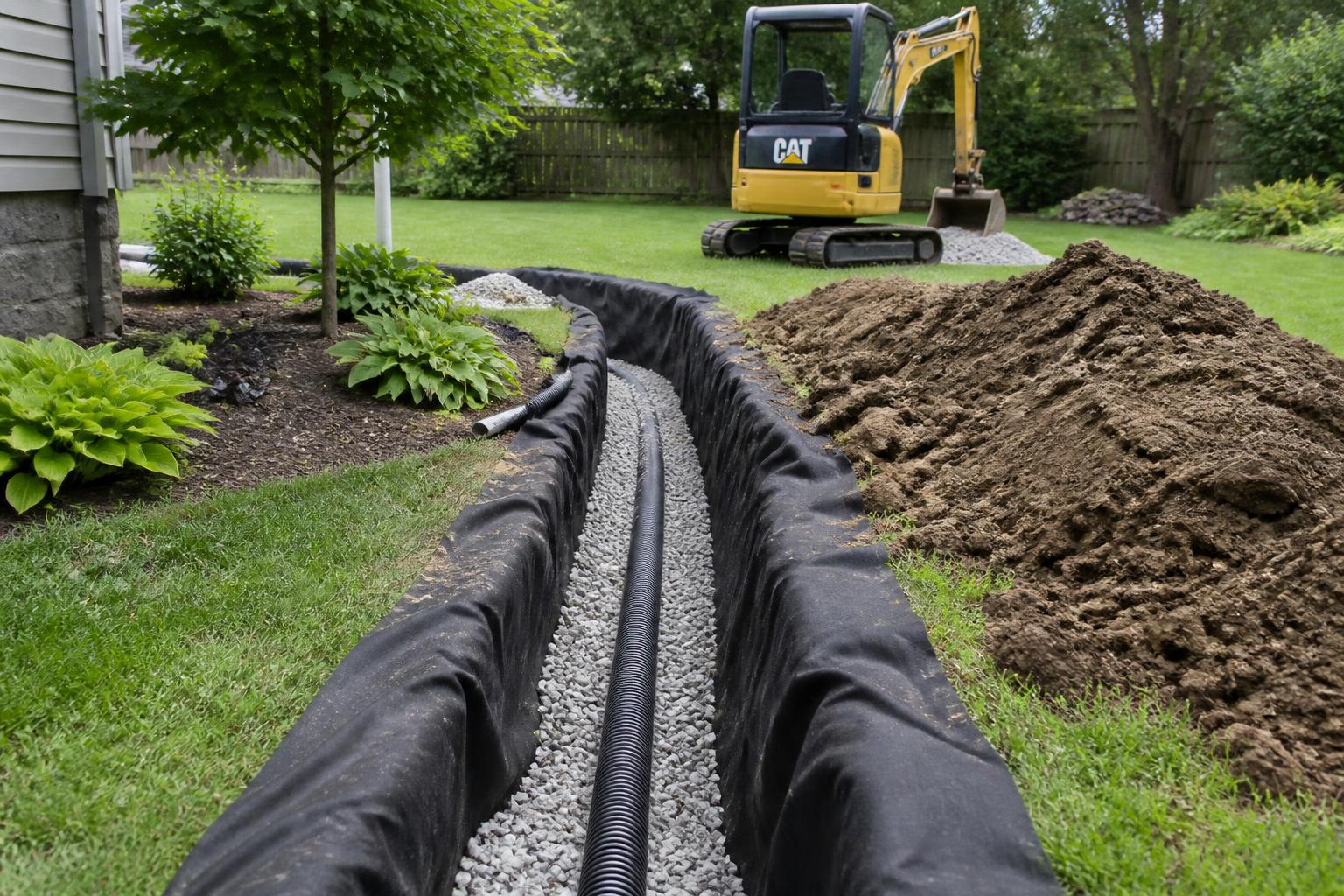
French drain trench with filter fabric, washed stone, and perforated pipe installed in a residential yard

Yard Drainage

Soggy lawns, ponding water, wet foundations. Fixed.

French drains, dry wells, buried downspouts, catch basins, and regrading for residential and commercial properties across Massachusetts and beyond. Drainage is not only about keeping water out of the building. It is about reclaiming a yard you cannot mow, walk on, or use because water sits on it for days after every storm.

Signs your property has a drainage problem

Surface water is the most common and most overlooked cause of foundation damage, wet basements, and ruined landscaping.

  • Standing water or soggy low spots days after it rains
  • Downspouts dumping runoff right against the foundation
  • Water seeping into a basement or crawl space during storms
  • Ponding in parking lots, driveways, and walkways
  • Erosion, washed-out mulch, and rutted lawn areas
  • Ice buildup at entries and drive aprons each winter
Excavated drainage trench with washed stone bedding beside a New England home

Drainage solutions we design and install

There is no single fix for a wet property. The right system depends on where your water comes from and where it can go.

French Drain Installation

A perforated pipe set in clean washed stone and wrapped in non-woven filter fabric intercepts surface and shallow groundwater and carries it to a real outlet.

Most French drains fail on installation, not design. Missing fabric, the wrong stone, no measured slope, or nowhere to daylight. We survey the pitch and solve the outlet before we ever break ground.

Buried Downspout Extensions

Roof water is the single largest volume hitting most properties. We tie downspouts into solid pipe and carry that water well away from the building.

Solid (non-perforated) SDR or schedule pipe, pop-up emitters or dry well discharge, and clean-outs so the line stays serviceable for decades.

Dry Wells & Infiltration Systems

When there is no low point to daylight to, water is collected and infiltrated underground into the surrounding soil.

Sized to the contributing roof or pavement area and the soil's percolation rate, using chambered or stone-and-fabric reservoirs that also help meet stormwater recharge requirements.

Catch Basins & Trench Drains

Grated inlets capture water at the low points of yards, driveways, and parking areas and route it into a piped system.

Sumped basins trap sediment so the pipe network stays clear, and heavy-duty trench drains handle vehicle traffic at garage aprons and loading docks.

Regrading & Swales

Sometimes the honest answer is not a pipe. When ground slopes toward the building, reshaping it is the most durable and lowest-maintenance fix.

We establish positive pitch away from the structure and shape vegetated swales to move sheet flow along a controlled path instead of across the lawn.

Curtain & Footing Drains

For hillside lots and chronically wet foundations, an exterior drain intercepts groundwater before it reaches the wall.

Installed uphill of the structure or at the footing, and paired with our exterior waterproofing membranes when the wall is already excavated.

How a drainage project runs

Engineering-led diagnosis, a clear written scope, and a clean installation you can actually inspect.

01

On-site water diagnosis

We walk the property, check grades, roof discharge, soil, and the outlet options. Water is traced to its actual source instead of guessing at a pipe location.

02

Designed, written proposal

You get a system sized to the contributing area with the components, depths, outlet, and restoration scope spelled out, with no vague line items.

03

Clean installation

Careful excavation, proper stone and filter fabric, surveyed slope, compacted backfill, and lawn or pavement restored when we leave.

04

Verification & maintenance plan

We flow-test the finished system, show you the clean-outs, and explain the simple maintenance that keeps it working for the long run.

Residential drainage

Soggy lawns, water at the foundation, a basement that only leaks in heavy rain, mulch washing across the walkway. We diagnose the real source rather than selling the same system to every house, and we restore the lawn and hardscape when the work is finished.

Commercial drainage

Ponding parking lots, water against the building envelope, eroding slopes, and stormwater recharge requirements. We install catch basin networks, trench drains, and infiltration systems sized for the site, scheduled to keep your property open and operating.

Drainage questions we hear most

How do I know if I need a French drain or just regrading?

If water is running toward the house across the surface, regrading or a swale usually solves it for less money. If water is collecting in a low area or pushing up through saturated soil, a French drain is the right tool. We determine which after seeing the property during or right after a rain event.

Will yard drainage fix my wet basement?

Very often it is a major part of the fix. Roof runoff and negative grade are the two most common causes of basement water. When groundwater is already under the slab, exterior drainage is paired with our interior dual drain system for a complete solution.

Do you handle commercial and municipal-scale drainage?

Yes. We work on parking lots, industrial sites, and multi-family properties with catch basin networks, trench drains, and infiltration systems designed to move and recharge large volumes of stormwater.

What areas do you serve?

We are based in Weymouth, Massachusetts and serve properties throughout Massachusetts and beyond, including the South Shore, Greater Boston, Cape Cod, and the Providence area.

When can drainage work be installed?

Any time the ground is workable, typically early spring through late fall in New England. Fall installation before the winter thaw cycle is a common choice for chronic problem properties.

Get a drainage assessment

Only takes 1 minute. Jeff or Dave will contact you!

Step 1 of 4

What is your ZIP code?

We service Massachusetts and beyond!